


Buying Rabbits for Your Micro Homestead: What to Know Before You Bring Them Home
Bringing new animals onto your homestead is always exciting, and for us, rabbits feel like a return to something familiar. After a little break from keeping them, we’ve recently welcomed two new additions—this time trying something different with Dutch rabbits rather than the New Zealands we’ve kept in the past. That fresh start felt like the perfect opportunity to share what we’ve learned about buying rabbits for beginners in the UK—what to look for, what to ask, and how to make the transition home as smooth as possible for both you and your animals.
Whether you’re completely new to rabbits or refining your system, getting the buying process right sets the tone for everything that follows.
Where to Buy Rabbits in the UK
Finding rabbits—especially the right rabbits—is often harder than people expect.
We’ve consistently used Pets4Homes, which allows you to connect directly with breeders. That’s important. Buying directly from a breeder means you can see the environment the rabbits were raised in, how they’ve been handled, and often even meet the parents.
That context matters more than people realise.
A rabbit raised well—by its mother, in a stable environment—will generally transition better, grow better, and be easier to manage long-term.
One key rule: don’t bring a rabbit home before 8 weeks of age. They need that time with their mother to be properly weaned and develop well.
Choosing the Right Rabbit Breed (Learn From Our Mistake)
Before you even start browsing, spend time understanding what you’re actually looking for.
We learned this the hard way.
As beginners buying rabbits, we once went out intending to buy Dutch rabbits and came home with… something else entirely. They weren’t Dutch. At best, they were a mix. At worst, who knows.
That experience taught us something simple but important:
If you don’t know exactly what a breed should look like, you can’t be sure you’re getting it.
So take the time to learn:
- Typical markings
- Body shape
- Adult size
- Temperament
Even within breeds, there can be variations. For example, Rex rabbits come in both standard and mini sizes—two very different animals in terms of space, feed, and purpose.
Think carefully about what you actually need:
- Are you raising for meat?
- Pets?
- Breeding?
- Colony systems?
Your choice of breed should match your system, not just your preference.
The Reality: Availability Is Limited
For beginners buying rabbits in the UK, something to bare in mind is you won’t always find exactly what you’re looking for.
We’ve travelled around an hour for every rabbit we’ve ever bought. That’s been fairly typical.
Standard-sized rabbits, in particular, can be surprisingly difficult to source. There are plenty of smaller or “mini” breeds available, but if you’re aiming for larger, productive animals, your options narrow quickly.
That means you may need to compromise—at least initially.
For example:
- Rabbits raised in hutches when you plan to use pens
- Different feeding systems
- Slightly different genetics than ideal
That’s okay.
If you’re breeding, you can improve your lines over time. Start with what’s available, then select and breed from the animals that perform best in your setup.
Questions to Ask Before Buying Rabbits
When you find a rabbit you’re interested in, don’t rush. Ask questions.
You’re not just buying an animal—you’re inheriting its entire history up to that point.
Here are the key areas we always cover:
1. Indoor or Outdoor Raised?
If you’re planning to keep rabbits outdoors (as we do), ideally they should already be used to outdoor conditions.
Moving an indoor rabbit straight outside can be a shock:
- Different temperatures
- Different coat development
- Different environmental stressors
Matching their current setup to your future setup makes everything easier.
2. Feeding and Diet
Find out:
- What they’re eating
- How often they’re fed
- Whether they’ve had hay, pellets, fresh greens
Rabbits thrive on consistency. Sudden dietary changes can cause digestive issues, so understanding their current diet helps you transition them safely.
If possible, ask for some of their current feed to take home. This allows you to gradually introduce your own system.
If that’s not available (and occasionally it isn’t), fall back to basics:
- Start with hay
- Introduce new foods slowly
3. Management Style
How have they been kept?
- Hutch or colony?
- Handled regularly or not?
- Socialised or more independent?
If you can find rabbits already raised in a system similar to yours, it removes a lot of friction.
But again, don’t worry if it’s not a perfect match—rabbits are adaptable.
4. Date of Birth
This is essential.
You need to know:
- They’re old enough to leave the mother (minimum 8 weeks)
- When they’ll reach breeding age
- How to manage their development
It also helps you track growth and health properly once they’re home.
Transporting Rabbits Home
Once you’ve bought your rabbits, the next step is getting them home safely.
It sounds simple, but this is often their first journey—and it can be stressful for them. Here are our top travelling tips for beginners buying rabbits in the UK.
Use the Right Carrier
We use cat carriers, sized for the rabbit’s adult size, not just its current size.
You want:
- Enough room to sit comfortably
- Not so much space they get thrown around
Bedding Matters
We typically use straw:
- Comfortable
- Safe if chewed
- Familiar for most rabbits
Avoid anything they might ingest that could cause issues.
Keep the Environment Calm
Rabbits are sensitive, especially during transport.
So:
- Keep the car cool (avoid overheating)
- Drive smoothly (no harsh braking or fast corners)
- Keep noise low
Think of it as reducing stress wherever possible.
Secure the Carrier
We strap ours into the back seat so they don’t slide around.
Position them where you can keep an eye on them without distraction.
Plan the Journey
Shorter journeys are always better.
We aim to stay within about an hour when sourcing rabbits. If you need to travel further:
- Take breaks
- Turn the engine off
- Offer food and water
They may not eat or drink, but giving them the opportunity matters.
Bringing Rabbits Home: The First Few Hours
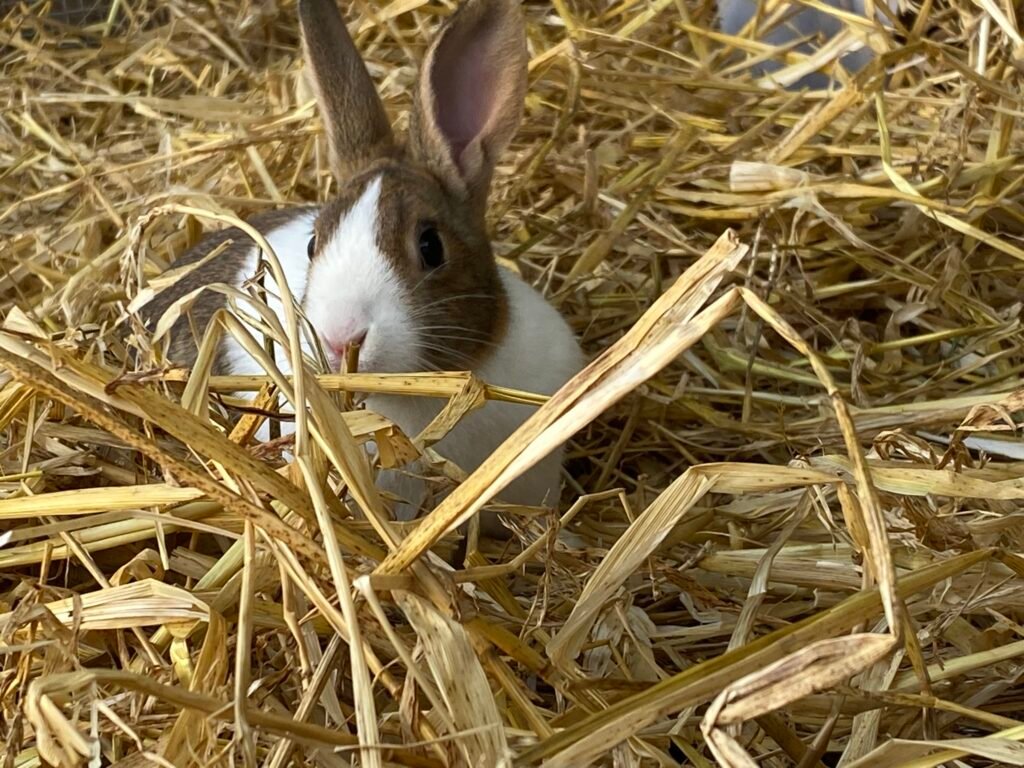
Preparation is everything here.
Before you even leave to collect them, their housing should be:
- Fully set up
- Secure
- Supplied with hay, water, and food
When you arrive, simply place them straight into their new space.
And then—this is the hard part—leave them alone.
Give Them Space
They’ve just:
- Left their mother
- Left their siblings
- Travelled in a car
- Entered a completely new environment
That’s a huge upheaval.
Resist the urge to fuss. Let them explore, settle, and decompress.
Stick to a Consistent Feeding System
For us, that means:
- Hay available at all times
- Main feed (pellets or fresh food) in the evening
We start them on that schedule immediately to build consistency from day one.
Initial Health Checks
Once they’ve settled in, we do a few simple checks.
Weighing
We weigh all new rabbits:
- Using bathroom or luggage scales
- Either in the carrier or by holding them
This gives a baseline:
- You can track growth
- Monitor condition
- Compare against breed expectations
It’s also surprisingly useful for identification if you ever end up with similar-looking rabbits.
Physical Check
Look over:
- Eyes
- Ears
- Fur condition
- General alertness
And yes—double check the sex.
Because mistakes happen.
We recently bought what we thought was a male and a female… and ended up with two females. Not a problem for us, but definitely not what we planned.
Introducing Rabbits to Each Other
Because both of our rabbits were female, new and young (around 8–10 weeks), we introduced them straight away.
At that age, this approach works well.
You may see behaviours that look concerning at first:
- Mounting
- Chasing
- Grooming dynamics
This is usually dominance behaviour, not breeding.
As long as:
- There’s no actual fighting
- No injuries
…it’s best to let them work it out.
In our case, within a few hours they were settled, and shortly after that, happily snuggling together.
A Note on Quarantine
If you already have rabbits at home, this step is important.
New rabbits should ideally be quarantined before being introduced:
- Monitor for illness
- Prevent disease spread
We didn’t do this in this instance because both rabbits were new and arrived together—but in an established setup, it’s a sensible precaution.
Final Thoughts on Buying Rabbits for your UK Homestead
Buying rabbits in the UK for beginners is not complicated.
If you take the time to:
- Choose the right breed
- Ask the right questions
- Prepare properly
- Manage the transition carefully
…you set yourself up for healthier animals, smoother management, and better long-term outcomes.
For us, bringing rabbits back onto our micro homestead has been a reminder of how rewarding they are—not just in what they produce, but in how they fit into the rhythm of daily life.
We’ll be sharing more as we go, particularly around raising rabbits and producing your own meat at home. If you’ve got questions, they’re always welcome.

Leave a Reply